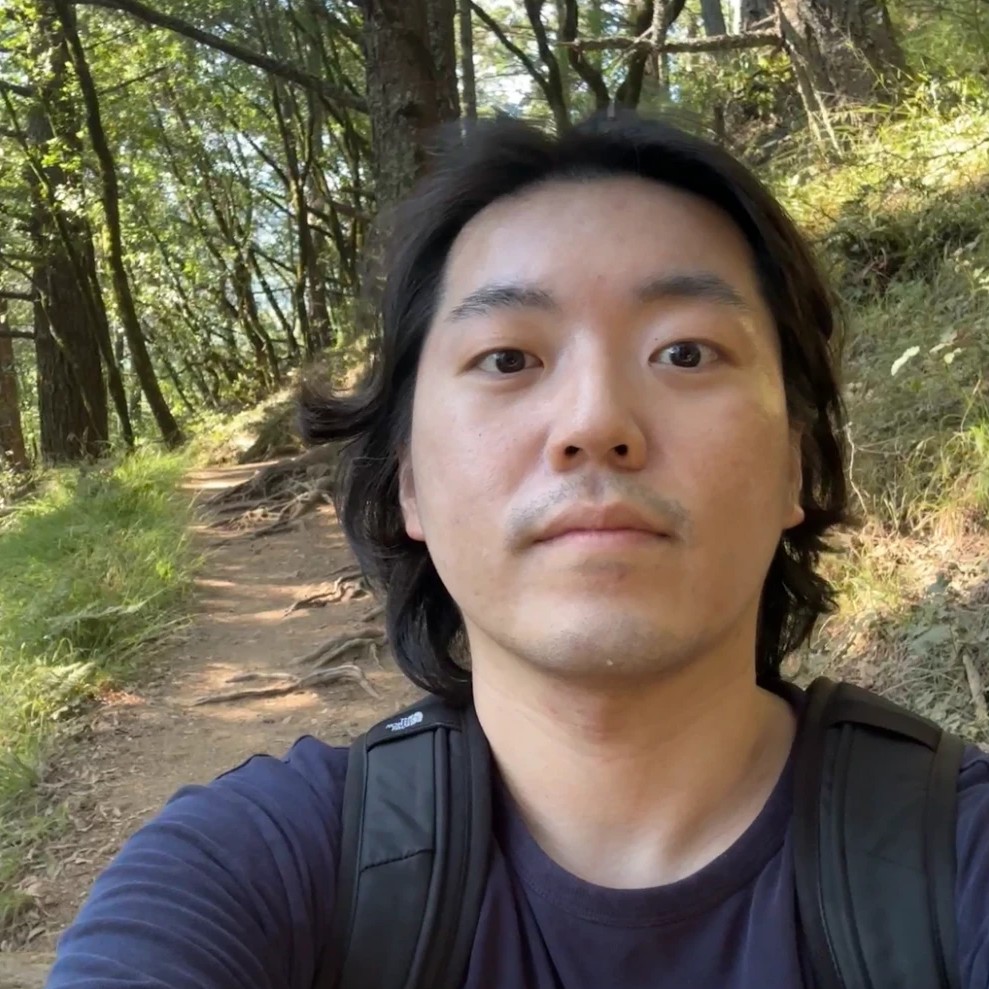
Dongwon Kim
I am a postdoctoral researcher at KAIST, working with Prof. Jeany Son. I previously completed my BS and PhD at POSTECH CVLab where I worked with Prof. Suha Kwak. My research centers on whether machines can learn representations with the right abstraction and hierarchy, spanning work in compositional representation (SelfMod), multi-modalities (DivE, SaG, MaskGen), and world model (ongoing, CompACT).
24 Sep 2026 A paper on generation-friendly image tokenization is accepted at NeurIPS 2026 (arXiv).
all news- 24 SepA paper on generation-friendly image tokenization is accepted at NeurIPS 2026 (arXiv).
- 20 AprI gave invited talks at Google DeepMind and Yonsei University, about CompACT and abstraction for world model.
- 22 FebA paper on world model is accepted at CVPR 2026 (CompACT).
- 01 FebI won POSTECH CSE Best Research Award 2025, recognizing the best research among PhD graduates.
- 14 JulA paper on 1-dimensinal tokenization and text-to-image generation is accepted at ICCV 2025 (MaskGen).
- 14 JulI have completed my defense - now I’m officially a Ph.D (thesis title: “Learning Compositional Visual Representations for Vision-Language Understanding and Generation”).
- 26 SepA paper about object-centric learning is accepted at NeurIPS 2024.
- 10 JunOne paper is accepted at ECCV 2024.
- 10 JunJoined Bytedance (San Jose, CA) as a research intern
- 14 MarOur paper about referring image segmentation has been accepted at NAACL 2024 main track.
- 07 DecI am really grateful to have been granted the POSTECHIAN fellowship!
- 15 JulA paper about weakly-supervised referring image segmentation is accepted at ICCV 2023.
- 21 MarA paper about cross-modal retrieval is selected as a highlight at CVPR 2023!
Publications
Highlighted: first, co-first, or co-corresponding author · * equal contribution · † co-corresponding
-
NeurIPS 2026 GENStructured State-Space Regularization for Generation-Friendly Image Tokenization
-
-
arXiv 2026 V+LEventCoT: Event-centric Video Chain-of-thought for Reasoning Temporal Localization
-
arXiv 2026 WMACID: Action Consistency via Inverse Dynamics for Planning with World ModelsPlanning with world models usually scores action sequences only by how close the predicted final state is to the goal, ignoring whether the intermediate transitions are physically realizable. ACID adds a cycle action-consistency term: an inverse dynamics model re-infers each action from the predicted transition, and the mismatch is added to the planning cost. Across four world models and six tasks, it improves planning and matches baseline accuracy with far less planning compute.
-
CVPR 2026 WM·GENPlanning in 8 Tokens: A Compact Discrete Tokenizer for Latent World ModelLatent world models usually encode each observation with hundreds of tokens, which makes planning slow. CompACT is a discrete tokenizer that compresses an observation into as few as 8 tokens. An action-conditioned world model built on it plans competitively while running orders of magnitude faster.(An early version appeared in LSRW workshop in CoRL 2025)
-
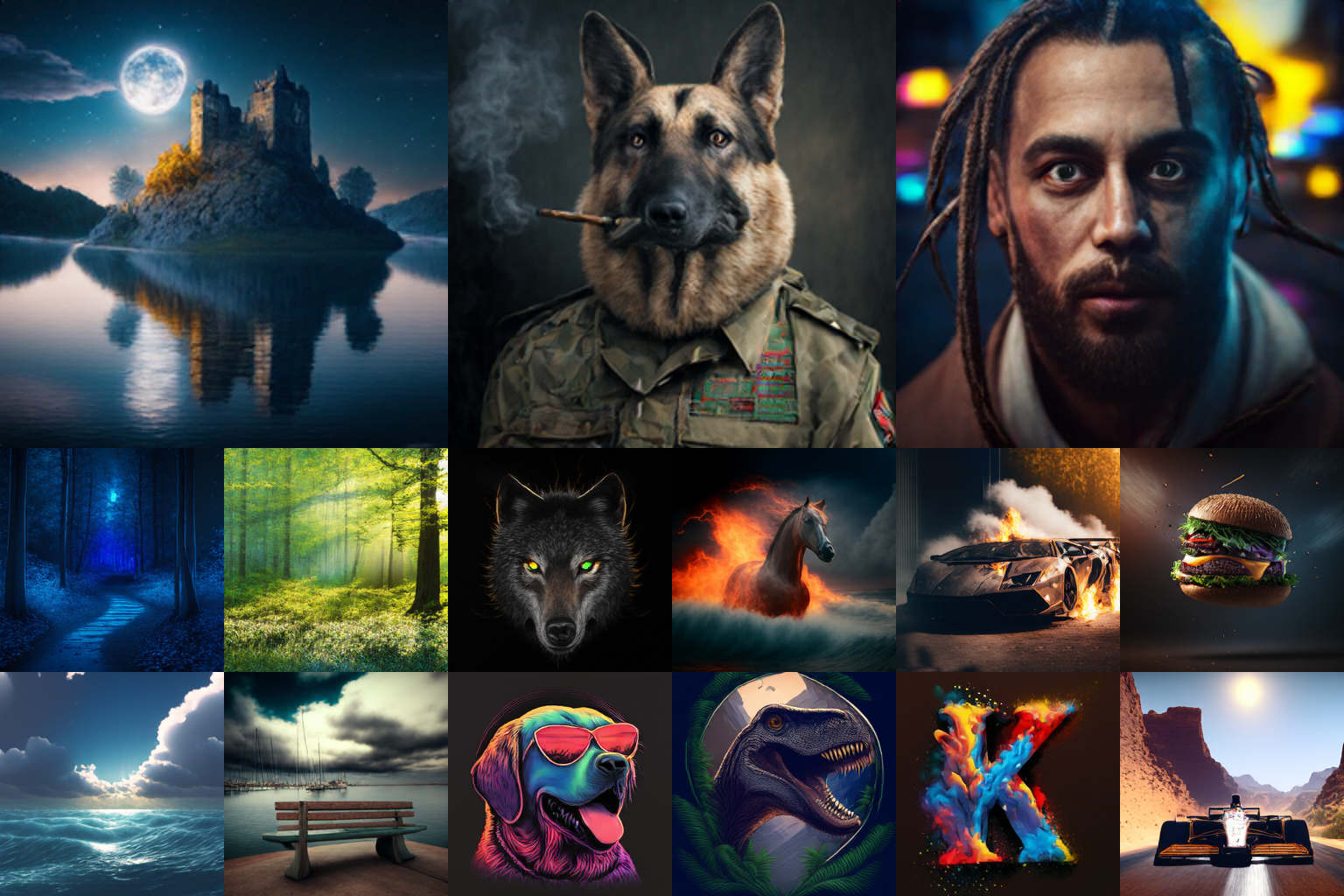
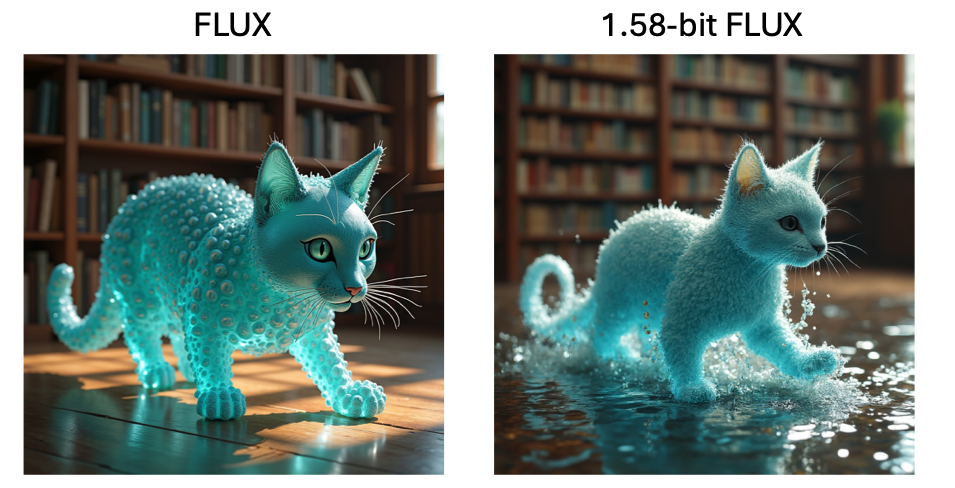
ICCV 2025 GEN·V+LDemocratizing Text-to-Image Masked Generative Models with Compact Text-Aware One-Dimensional TokensTA-TiTok is a 1D image tokenizer, discrete or continuous, that uses text during de-tokenization and trains in a single stage, so it scales easily to large datasets. Building on it, MaskGen is a family of text-to-image masked generative models trained only on open data that performs comparably to models trained on private data.
-
-
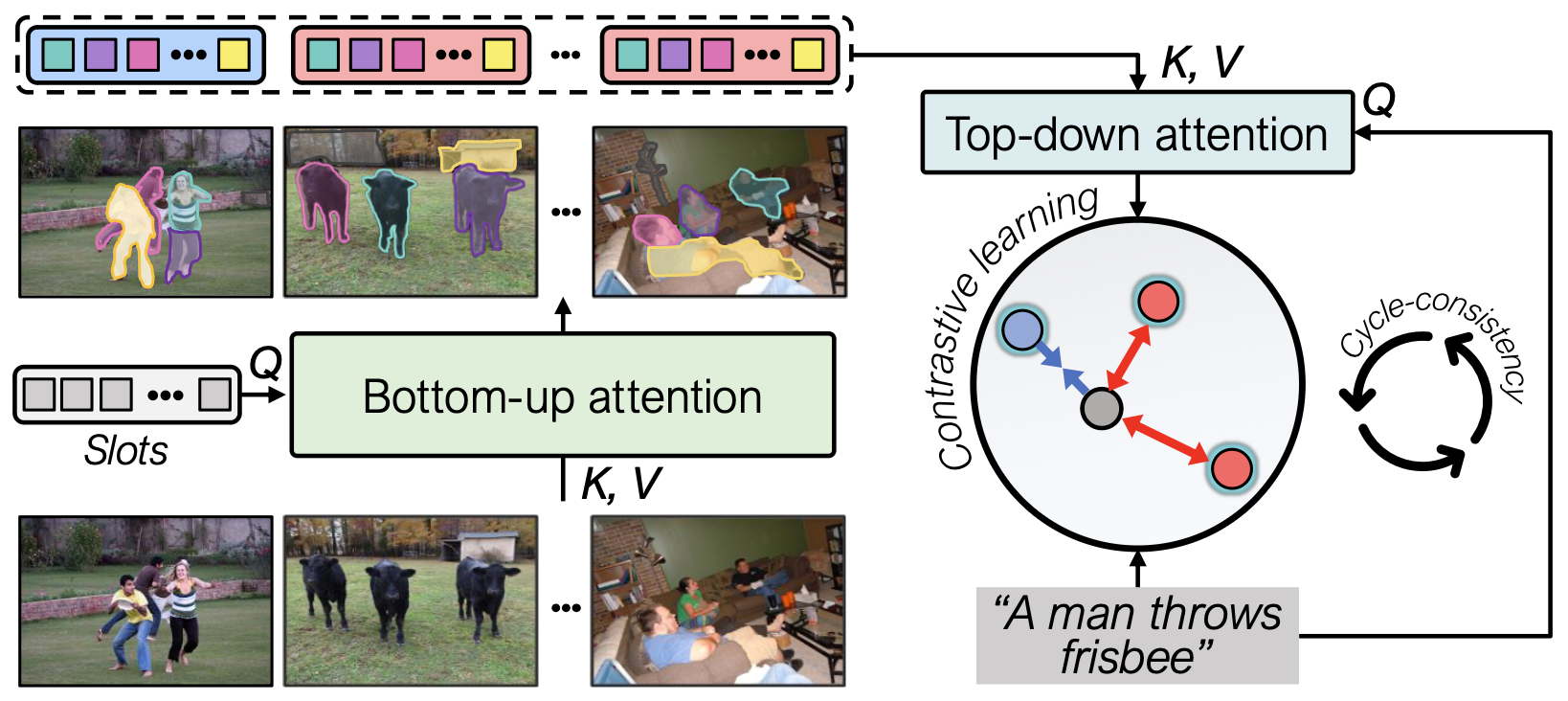
NeurIPS 2024 REPBootstrapping Top-down Information for Self-modulating Slot AttentionBottom-up object-centric learning struggles when an object’s features vary widely in complex scenes. We add a top-down pathway to slot attention: the model first estimates object semantics from its own outputs, then uses them to steer attention toward relevant features. This gives state-of-the-art object discovery on synthetic and real-world benchmarks.
-
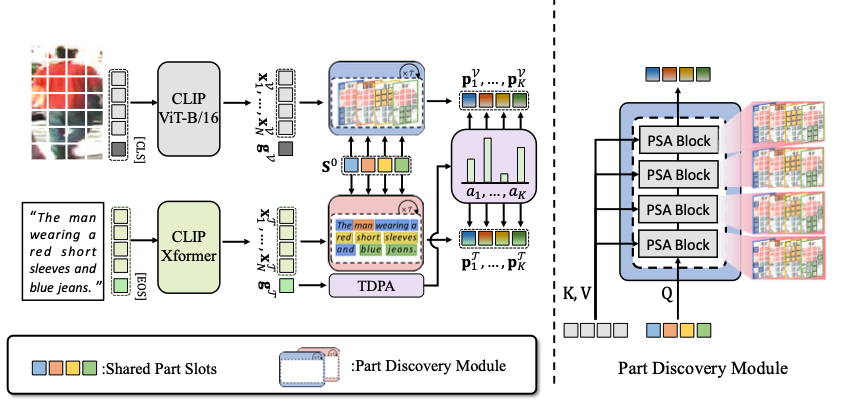
ECCV 2024 V+LPLOT: Text-based Person Search with Part Slot Attention for Corresponding Part Discovery
-
-
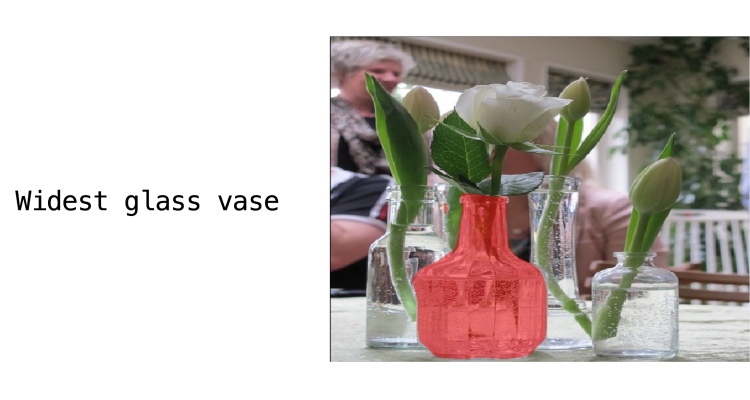
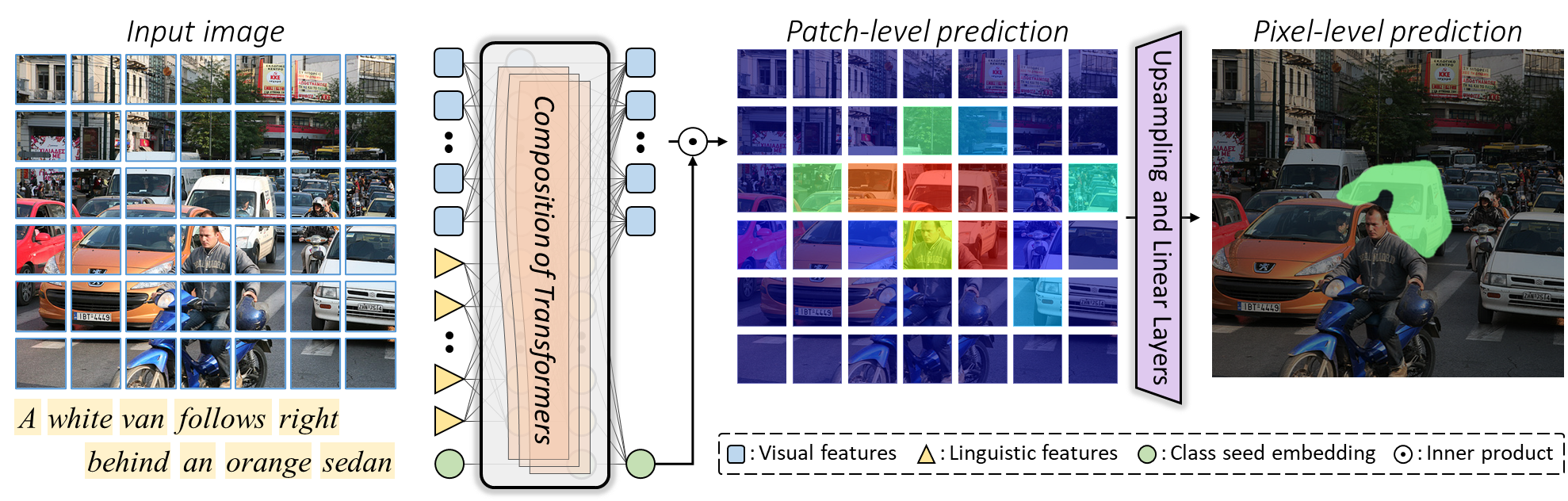
ICCV 2023 V+LShatter and Gather: Learning Referring Image Segmentation with Text SupervisionWe learn referring image segmentation using only text descriptions of the training images as supervision. The model first discovers semantic entities in an image, then gathers the ones relevant to the text query into the referent’s mask, trained with a loss that needs no extra labels. It outperforms prior weakly supervised and open-vocabulary segmentation methods on four benchmarks.
-
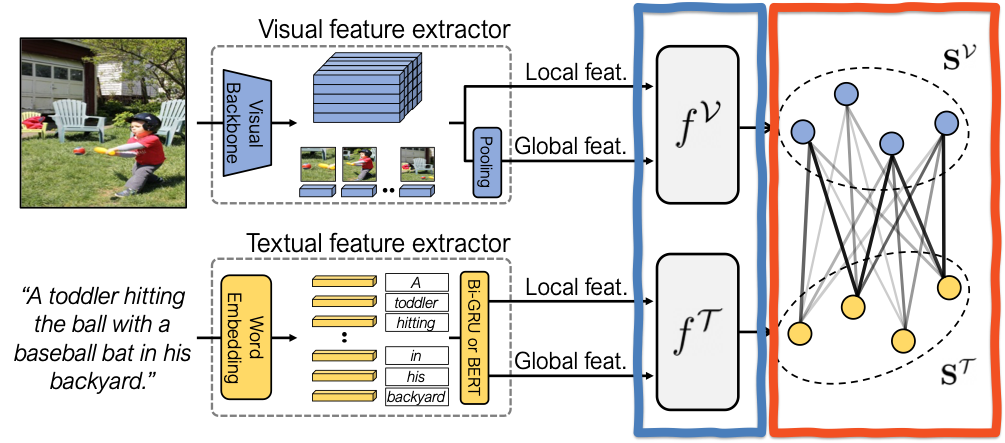
CVPR 2023 V+LImproving Cross-Modal Retrieval With Set of Diverse EmbeddingsIn image-text retrieval, one image can match many captions and vice versa. We represent each sample as a set of diverse embeddings produced by a slot-attention-based set prediction module, and compare sets with a new smooth-Chamfer similarity. It outperforms prior methods on COCO and Flickr30K, including ones that need much more inference compute.
Experience
| 2025 – Now |
Postdoctoral researcher · KAIST, Daejeon, KR
InnoCORE-LLM, PI: Jeany Son
|
|---|---|
| 2024 |
Research Intern · Fundamental Research Team, ByteDance SEED, San Jose, US Developed efficient text-to-image generative model using 1D tokens (MaskGen)
|
Honors and Awards
|
POSTECH CSE Best Research Award, POSTECH, 2026
IPIU Best Paper Honorable Mention, 2026 POSTECHIAN Fellowship, POSTECH, 2023
BK21 Best Paper Award, POSTECH GSAI, 2023
Qualcomm Innovation Fellowship Winner, Qualcomm Korea Corp., 2022
NAVER x POSTECH AI DAY The 2nd and 3rd Prize, 2022
Qualcomm Innovation Fellowship Winner, Qualcomm Korea Corp., 2021
IPIU Best Paper Award, 2021
|
Professional Services
Reviewer
|